
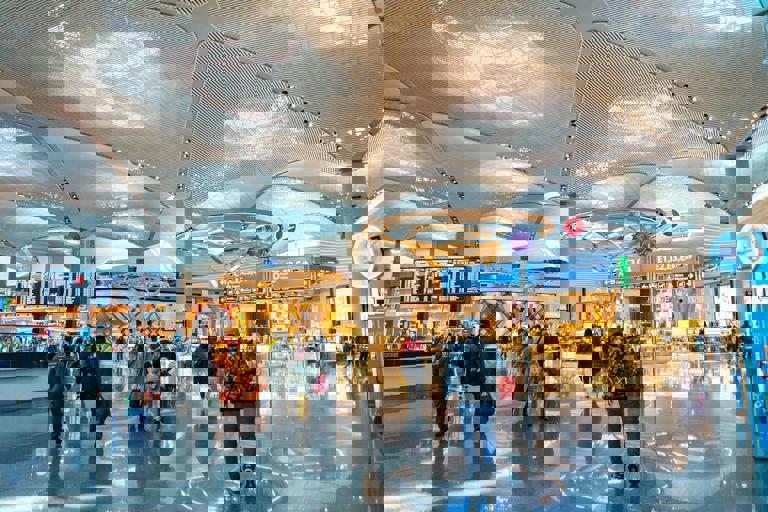
Authorities at Kuala Lumpur International Airport (KLIA) were prompted to conduct an intensive inspection this week after noticing suspicious behavior among two arriving travelers. The individuals, whose nationalities have not yet been disclosed, appeared nervous during routine customs questioning, attracting the attention of officers stationed at the arrivals hall. Initial interviews failed to yield satisfactory explanations for their presence or the purpose of their journey into Malaysia, sparking further curiosity among airport security staff.
Following the preliminary questioning, customs officers proceeded to examine the travelers' checked baggage with heightened scrutiny. It was during this search that authorities made a striking discovery: multiple suitcases packed with large sums of cash. Official statements later confirmed that the suitcases contained more than MYR 4 million and nearly USD 200,000 in cash, a finding that immediately raised red flags among the inspection team.
According to KLIA customs chief Zulkifli Abdullah, the discovery marked one of the largest cash seizures the airport had encountered in recent years. “It is extremely unusual for individuals to travel with such vast amounts of undeclared money,” he said during a press briefing. The incident has since ignited concerns regarding money laundering and the potential for illegal financial activities transiting through Malaysian airports.
In Malaysia, travelers are generally required to declare cash exceeding USD 10,000 upon arrival or departure, as stipulated by Bank Negara Malaysia regulations. The failure of the two individuals to make any declaration, combined with their evasive responses, led officials to suspect that the funds could be linked to illicit activities. Investigations are now underway to determine the source of the cash and the intentions behind transporting such a large sum across borders.
Malaysian authorities have involved several agencies in the probe, including the Royal Malaysia Police’s Commercial Crime Investigation Department, Bank Negara, and the Malaysian Anti-Corruption Commission. A spokesperson from the anti-corruption agency stated, “We take such cases very seriously as they may be indicative of larger networks operating internationally.” The possibility of the funds being tied to money laundering syndicates cannot be ruled out at this stage.
The two travelers, currently in custody, are reportedly cooperating with investigators but have offered conflicting accounts about their travel plans and the origin of the seized money. Legal experts note that carrying large sums of money across borders without declaration can carry severe penalties, including forfeiture of the funds and criminal charges if evidence of wrongdoing is found. Their continued detention is pending the outcome of further forensic analysis of the cash.
This case has reignited public debate in Malaysia about the effectiveness of airport security protocols and the need for stronger cross-border regulations. Dr. Noraini Hashim, a criminology professor at a local university, remarked, “Such incidents remind us that criminal enterprises often exploit loopholes in international travel for financial gain. It also highlights the need for constant vigilance and better coordination among law enforcement bodies.”
Economic analysts have warned that money laundering poses risks not only at a national level but can also affect Malaysia’s reputation in the global financial system. Lim Kai Seng, a financial consultant, stated, “When large, undeclared sums like this surface, they can shake investor confidence. Authorities must demonstrate a firm response to reassure law-abiding businesses and international partners that Malaysia is committed to upholding stringent financial controls.”
In response to media queries, Transport Minister Anthony Loke has announced plans to review and potentially tighten airport screening procedures, especially for high-risk flights and travelers. These proposed measures may include more advanced surveillance technologies and enhanced inter-agency data sharing. Loke emphasized that while traveler privacy is important, the primary concern must always be public safety and compliance with financial regulations.
As the investigation continues, many Malaysians are closely watching the outcome for signs of systemic improvements in border security. The case serves as a stark reminder of the evolving tactics used in transnational financial crimes. Authorities hope that swift action and transparency in handling this incident will serve as both a deterrent and a reassurance to the public that Malaysia remains vigilant against such threats.